
Jump to content

From the TurfNet NewsDesk


  • John Reitman
    For her research work on putting green rootzone management, Maureen Kahiu, Ph.D., has been named this year's recipient of the Musser International Turfgrass Foundation Award of Excellence.
    The award is given to outstanding doctoral candidates who, in the final phase of their graduate studies, demonstrate overall excellence in turfgrass research.
    "It is an incredible honor to be selected as this year's Musser Award of Excellence recipient, and I'm genuinely humbled to have my name listed among some of the greatest turfgrass scientists," said Kahiu. "This achievement is owed to the steadfast support of my husband, Matthew, and my family."
    The foundation also named Elisabeth Kitchin as the inaugural recipient of the H. Burton Musser Masters Scholarship.
    In 2016, Kahiu (right) received a bachelor's of science degree in environmental horticulture and landscaping technology from Jomo Kenyatta University of Agriculture and Technology in Kenya. She completed a master's in agronomy in 2022, with a minor in plant pathology, at Penn State University, where her research focused on demethylation-inhibitor fungicides and Clarireedia spp.
    In 2025, Kahiu earned a doctorate in plant, soil and environmental sciences at the University of Tennessee, with a perfect 4.0 GPA. Her doctoral research focused on putting green root-zone organic matter dynamics and turfgrass performance, and she has produced multiple peer-reviewed publications. 
    Kahiu currently serves as an assistant extension educator of turfgrass and weed ecology at the University of Connecticut. In this role, she teaches undergraduate and graduate courses in turfgrass and weed science, conducts applied research, advises student organizations and develops professional training programs for turfgrass managers. 
    "The Award means a great deal to me, and I am truly thankful to everyone who has guided and encouraged me through my journey, especially Dr. Jim Brosnan, Dr. John Kaminski and Mr. Charles Munyori," said Kahiu. "Their mentorship has shown me the endless possibilities in this wonderful industry, that I plan to continue serving through my teaching and extension responsibilities at UConn."
    The criteria for the award include "graduate work, academic record, dissertation, publications, leadership and extracurricular activities," according to the foundation. 
    To date, awards have been granted to doctoral students from the universities: Arizona, Auburn, Cornell, Georgia, Maryland, Michigan State, Minnesota, Nebraska, North Carolina State, Ohio State, Penn State, Purdue, Rutgers, Tennessee, Texas A&M and Virginia Tech.
    "All of the applicants for the Award of Excellence are of the highest caliber," said Frank Dobie, president of the Musser International Turfgrass Foundation. "We strive to select the one candidate that we feel is the best of the best and, this year, that was Dr. Kahiu."
    Previous recipients include: 2025 — Erick Begitschke, University of Georgia; 2024 — John Peppers, Auburn; 2023 - Wendell Hutchens, North Carolina State; 2022 - Devon Carroll, Tennessee; Travis Russell, Penn State; 2021 - Cameron Stephens, NCSU; 2020 - Garrett Heineck, Minnesota; 2019 - Phillip Vines, Rutgers; 2018 - Patrick Burgess, Rutgers; 2017 - Matthew Jeffries, NCSU; David Jespersen, Rutgers; 2016 - Lisa Beirn Rutgers; 2015 - Mattew Elmore, Texas A&M; Joseph Roberts, Maryland; 2014 - James McCurdy, Mississippi State; 2013 - Emily Merewitz, Rutgers; 2010 - James Rutledge, Purdue; 2009 - Jo Anne Crouch, Rutgers; 2008 - Adam Hixson, NCSU; 2007 - Aaron Patton, Purdue; 2006 - Kurt Steinke, Wisconsin; Sara Thompson, NCSU; 2005 - John Kaminski, Maryland; 2003 - Eric Watkins, Rutgers; 2002 - Lane Treadway, Georgia; 2001 - Stacy Bonos, Rutgers; 2000 - Matthew Fagerness, NCSU; 1999 - William Von Sigler, Purdue; 1998 - Andrew McNitt, Penn State; 1997 - Rob Golembiewski, Ohio State; 1996 - Daniel Dalthrop, Cornell; 1995 - Paul Johnson, Minnesota; 1994 - Jennifer Johnson-Cicalese, Nebraska; 1991 - Grady Miller, Auburn; Eric Miltner, Michigan State; Karen Plumely, Rutgers; 1992 - Richard Davis, Purdue; Jeff Klingenberg, Nebraska; Zach Reicher, Purdue; 1991 - James Bond, Tennessee; 1990 - Phil Allen, Minnesota; Meoldee Fraser, Rutgers; Virginia Lehman, Texas A&M; 1989 - Andrew Ralowicz, Arizona; Gwen Stahnke, Nebraska.
    Kitchin (right), the recipient of the H. Burton Musser Masters Scholarship, earned a bachelor's degree in agroecology and sustainable food systems from North Carolina State University, where she was introduced to the turfgrass industry while working under Jim Kerns, Ph.D. She earned a master's degree in plant pathology, physiology, and weed science from Virginia Tech under David McCall, Ph.D. and Shawn Askew, Ph.D. 
    "We established this new $5,000 scholarship to identify up-and-coming turf graduate students who have the potential to become tomorrow’s scientists and educators," Dobie said. "Kitchin is exactly the kind of excellent student and individual we had in mind."
    Her research focused on precision turfgrass management, including machine learning for pest detection, targeted pesticide applications, and the use of soil moisture sensors and modeling to improve irrigation decision-making. Kitchin is currently pursuing a doctoral degree in plant pathology, physiology and weed science at Virginia Tech under McCall.
    "I am unbelievably honored to receive the Musser Masters Scholarship," said Kitchin. "I could not have achieved this without the incredible support of my parents, Kyle and Helena, my sisters, Emma and Eden, and my incredible friends and colleagues. The most gratifying part of the turfgrass industry is the incredible company I keep, and I am so grateful to each of my mentors, colleagues, and friends for supporting me along the way."
  • Ravel to succeed Reasons, who is retiring after 40 years with the company
    After 40 years with Syngenta and its legacy companies, Scott Reasons is calling it a career.
    Reasons (top right) will retire effective May 31 as head of Syngenta Professional Solutions North America, a position he has held for the past 16 years. Dave Ravel (bottom right), head of sales for Syngenta Professional Solutions, will succeed Reasons beginning June 1.
    "Scott's legacy of leadership, passion for winning and commitment to our people and customers has shaped Syngenta Professional Solutions into the leader it is today," Simon Elsworth, global head of Syngenta Professional Solutions, said in a news release.
    "Over the past 16 years, Scott has led extraordinary growth, built a strong and enduring culture and positioned SPS as the partner of choice across our professional markets. At the same time, I am excited for Dave to step into this role. His deep understanding of our customers, his commercial leadership and his ability to inspire teams make him the right leader to continue our momentum and lead SPS into its next chapter. Dave's commitment to this business is unparalleled. He constantly pushes us all to be better for our customers and distributor partners, and that drive will be invaluable as we move forward."
    Reasons started his career with Syngenta in May 1986 in the Wilmington, Delaware office, followed by sales roles in the Southeast and Western U.S. territories. In 2002 he moved to Greensboro, North Carolina where he worked in crop protection marketing. 
    Since 2007 Reasons has held various roles in Syngenta Professional Solutions including leading both the North and South American regions. 
    During his 16 years leading Syngenta Professional Solutions, the division nearly tripled in size across the Americas.
    Ravel has more than 30 years of experience in the turf, ornamental and pest management industries and has spent more than 25 years with Syngenta and its legacy companies, with leadership roles in sales, marketing and key accounts. He has been head of sales since 2012, and in that time has played a key role in strengthening customer relationships, advancing Syngenta's solutions-based approach and supporting growth across golf, lawn care, ornamentals and professional pest management.
    "Scott has had an incredible impact on this business — from the culture he helped build to the trust he earned with customers and partners across North America," Ravel said. "Because of his leadership, our innovation pipeline has accelerated significantly, bringing solutions to market that address real unmet needs for our customers. As a result of Scott's efforts, SPS is exceptionally well positioned today, and we will ensure business continuity for our customers as we move forward."
  • For golf course superintendents looking for additional tools for fairway turf management, Envu recently launched its Fairway Protection Playbook.
    The playbook provides a roadmap for season-long management of disease, insect and weed pests in warm- and cool-season turfgrass. 
    Developed by the Envu Green Solutions Team, the guide helps superintendents take a proactive approach — applying treatments ahead of peak pest pressure and narrow application windows. Click here to request the guide.

     
    "Successful fairway performance is largely determined by decisions made before environmental and pest pressures intensify," said Zac Reicher, Ph.D., of Envu's Green Solutions Team. "Preventative applications help ensure golf course superintendents can strengthen the overall turf health, reduce cumulative stress and limit the establishment of diseases, insects and weeds that are difficult to control once symptoms appear."
    The playbook provides soil temperature thresholds, timing and recommendations for optimal application. By tracking indicators, superintendents can predict outbreaks before injury occurs. The guide outlines what to watch for early in the season, followed by specific timing and product recommendations.
  • The golf course on the campus of Louisiana State University is pretty much what one would expect from a 65-year-old layout built in a dead-flat state on the banks of the country's longest river — flat as a board.
    Designed in 1961 by Al Michael and Phil Thompson, LSU Golf Course never will be confused with on-campus counterparts like Yale Golf Course, Lonnie Poole Golf Course at North Carolina State University or the Washington Duke course in Durham, North Carolina. In fact, it does not even remotely resemble the University Club of Baton Rouge a few miles down Nicholson Drive, the David Toms design that is home to the university's men's and women's golf teams. 

    With greens fees ranging from $12 to about $25, the LSU Golf Course does have a certain appeal, despite conditions that never measured up to other courses throughout Baton Rouge. The course located in the shadows of 102,000-seat Tiger Stadium will close this summer, citing an inverse relationship between revenue and expenses. Students from the university's turfgrass program have historically been recruited to help maintain the course, which has struggled with conditioning for many years.
    The course is a popular destination for beginners, high-handicappers, seniors and those in search of a deal, all demographics the industry needs as it continues to plod along in its post-Covid renaissance. It also is scheduled to close June 30.
    According to the university, 15,012 rounds were played at LSU in 2025, but revenue has not been able to keep up with expenses. The university did not announce any official plans for the site, but published reports indicate the land has been targeted for a $1 billion entertainment district, the centerpiece of which will be a $400 million arena to replace the university's Pete Maravich Assembly Center.
  • Two of the country's leading university turfgrass programs will have a little extra cash to help fund research faculty positions, thanks to the Carolinas GCSA chapter.
    The Carolinas Association recently committed a total of $200,000 to Clemson and North Carolina State universities, with each institution to receive $100,000 over the next five years, the association said in a news release.
    "Clemson and NC State have played a critical role establishing the Carolinas' standing as one of the game's great golfing hubs," said Carolinas GCSA president and director of golf operations at Lonnie Poole Golf Course at NCSU Brian Green. "Decades and decades of turfgrass research performed at both institutions underpin the health of the golf industry that delivers billions of dollars in economic benefit to the region every year." Green is director of golf operations at Lonnie Poole Golf Course at NC State.

    The awards are the result of many years of conversations between representatives of the association and both universities about the challenges facing traditional turfgrass research funding sources. Both universities currently are in the midst of fundraising campaigns — NCSU NC State is working to raise $2.5 million to establish a Distinguished Chair in Golf Turf Management and Clemson's target is $1 million for a Distinguished Professorship in Turfgrass.
    Those fundraising efforts come in the wake of the recent retirements of Bruce Martin and Bert McCarty at Clemson and NCSU's Fred Yelverton and Rick Brandeburg.
    "Not only were these scientists world leaders, they built their knowledge and expertise right here in the Carolinas, on and around our golf courses," Green said. "Having such ready access to them was enormously helpful to our ability to produce excellent playing conditions in an economically and environmentally sustainable manner.
    "Endowed faculty positions are essential to thriving research and outreach efforts. Those positions signal the commitment of the university to an academic discipline at the highest level. They attract leading scholars who, in turn, attract top faculty and students." 
    The $100,000 gifts are funded through the Carolinas GCSA Rounds 4 Research online auction of donated golf rounds. North and South Carolina are home to nearly 900 golf courses.
    "Golf course superintendents have to be problem-solvers in our day-to-day work, and we are just as committed to providing solutions on an industry scale," Green said. "We are proud to support Clemson's and NC State's efforts to ensure the best science will always be at our fingertips."
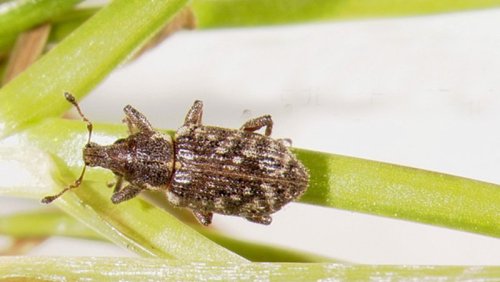
  • For turf managers battling annual bluegrass weevils, Syngenta recently launched WeevilTrak Plus, an evolution of its WeevilTrak program, with Atexzo.
    With the active ingredient isocycloseram, Atexzo is a new class of chemistry that received label registration from the U.S. Environmental Protection Agency late last year for control of a variety of common pests in cool- and warm-season turf including annual bluegrass weevil adults and all larval stages.
    The WeevilTrak Plus program offers greater application flexibility, enhanced efficacy, fewer applications, stronger resistance management and broader-spectrum control than many IGR‑based strategies, the company says.

    With no signal word or caution on the label, Atexzo also is registered for control of armyworm, Asiatic garden beetle, Bermudagrass mites, billbugs, black turfgrass ataenius, crane fly, cutworms, European chafer, European crane fly, flea beetle, green June beetle, grubs, Japanese beetle, June beetle, May beetle, mole cricket, northern masked chafers, Oriental beetle, sod webworm, southern masked chafer, sugarcane grub, turf caterpillar and white grubs. 
    WeevilTrak Plus combines real‑time scouting insights from independent and university entomologists with the innovations in ABW control to help superintendents manage this pest in annual bluegrass and creeping bentgrass turf. 
    "The novel active ingredient and mode of action of Atexzo allow us to significantly enhance the WeevilTrak Plus program," said Lisa Beirn, Ph.D., technical services manager for turf in the Northeast at Syngenta. "With the new four‑phase framework, superintendents can now achieve broader‑spectrum control with fewer applications—without sacrificing timing precision or season‑long performance."
    Syngenta has also added two new monitoring sites in WeevilTrak Plus — Glen Flora Country Club in Waukegan, Illinois and Ravinia Green Country Club in Riverwoods, Illinois. Deerfield Golf & Country Club in Brockport, New York is replacing Monroe Golf Club in Pittsford, New York.
     
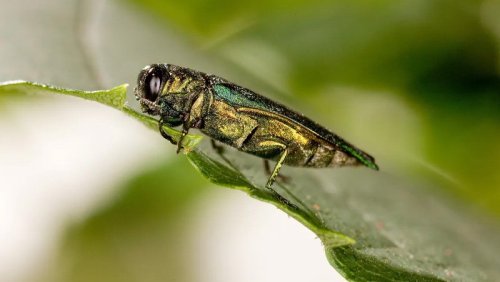
  • Like an invading army, a non-native pest from a foreign land is overtaking trees and forests across North America.
    Since it arrived in the United States 24 years ago in shipping material, the emerald ash borer has steadily been making its way across the continent, leaving a trail of dead ash trees in its wake. Once a problem restricted to the Midwest, the tiny invasive pest has now been confirmed in 38 states — 13 of which are west of the Mississippi River, including as far west as Oregon. Most recently, EAB was confirmed in Mississippi in 2025. Its presence also has been confirmed in six Canadian provinces
    EAB kills ash trees by disrupting the uptake of water and nutrients through the trunk and into the upper reaches of the tree.
    The ash borer is native to eastern Asia and was first discovered in the Detroit area in 2002 after it is believed to come to the U.S. in wood packing material aboard a Chinese freighter. It has no natural predators in North America to stop its spread across the continent.

    Scientists believe that the pest eventually will reach the entire ash tree range in North America, an area that covers parts of at least 47 of 48 contiguous U.S. states and six Canadian provinces. Each ash borer, however, only flies a few miles throughout its lifecycle. 
    Its rapid spread has been blamed largely on moving infested firewood. In response, the U.S. Department of Agriculture has limited or prohibited interstate movement of firewood in an effort to restrict or at least slow the movement of EAB.
    The website EmeraldAshBorer.info is a comprehensive digital resource managed by researchers at Michigan State University, the U.S. Forest Service and MSU Extension that offers information on how to identify EAB, diagnose damage and control it.
    Adult females grow to about a half-inch in length. They chew a hole in the bark into which they deposit their eggs. After hatching, the larvae eat their way through the cambium layer beneath the bark, creating channels that disrupt the tree's ability to move water and nutrients through its vascular system. In the spring, new adults chew through the bark and emerge leaving behind a D-shaped exit hole before flying into the canopy to ingest ash leaves as the reproductive process begins all over again.

    Symptoms of infestation include thinning of the canopy and sprouts growing from holes in the trunk that were created by the pests, along with scores of hungry woodpeckers that eat them. According to the Ohio Department of Agriculture, canopies of mature ash trees typically are decimated within two years of infestation and the trees dead within five years.
    Tree canopies can be wiped out within two years, and mature, healthy trees typically are dead within three to four years. All native North American ash species are susceptible to damage.
    EAB has been problematic on golf courses with heavy ash tree populations as dead or dying trees become an eyesore, as well as a safety concern.
    A guide on the EAB website by MSU researcher Gary Parsons, Ph.D., offers comprehensive information on identifying the pest and distinguishing between other species that might look similar to EAB. According to the guide, adults are a bright, metallic, emerald green. However, the greenish coloration might also include amounts of brassy, coppery or reddish reflections. According to Parsons, that metallic coloration can be influenced by light intensity, direction and quality. 
  • With more than 150 years in business, Reinders has been a trusted supplier of professional grade supplies in the Midwest for generations.
    SiteOne Landscape Supply recently acquired the Sussex, Wisconsin-based company.
    Founded in 1866 in Elk Grove, Wisconsin, Reinders had been a fifth-generation, family owned distributor of irrigation, agronomics, holiday and landscape lighting, and landscape supplies with 12 locations in Wisconsin, Michigan, Illinois, Indiana, Kansas and Minnesota. 
    With more than 150 years of industry leadership, Reinders is known for its technical expertise, rapid on-site diagnostics and tailored product recommendations. 
    SiteOne says it will build on Reinders' storied reputation, while expanding inventory depth, operational support and resources.

    SiteOne Landscape Supply has acquired Wisconsin-based Reinders. "As a very successful fifth-generation, family owned company, Reinders is well-known and respected in the green industry for quality and reliability, a commitment to exceptional customer service and for helping their customers succeed — values we share at SiteOne," said Doug Black, chairman and CEO of SiteOne. "This acquisition expands our ability to offer the full line of landscape supplies to our combined customers, enhances our presence in the market, and provides an avenue for further expansion in the growing Midwest market."
    According to Reinders, company officials evaluated multiple options before "choosing to partner with SiteOne, citing shared values, a focus on the green industry, strong resources and capabilities and a commitment to preserving its legacy," according to a news release. Reinders will continue operating under its established name, maintaining the customer relationships and service model that have defined the company for generations, while leveraging the full resources and capabilities of SiteOne.
    "For more than 150 years, we have built a name, a brand and a legacy in the green industry," said Ann Reinders, vice president of operations at Reinders, who will remain with the business following the acquisition. "While the Reinders family has led the company for five generations, it's our incredible people who have built the brand. SiteOne is the best partner to continue to further the service excellence and quality products the green industry deserves. I look forward to leading Reinders into our next phase, strengthened by the infrastructure, leadership and people-focused approach SiteOne provides."
    Based in Roswell, Georgia, SiteOne Landscape Supply is a wholesale distributor of landscape supplies in the United States and Canada.
  • Big changes are coming at Jacksonville Golf and Country Club.
    Work is under way on a comprehensive $30 million renovation at the club in North Florida, including a $14 million overhaul of its 1989 Clyde Johnston-Fuzzy Zoeller-designed golf course by architect Andy Staples. The renovation by Staples Golf Design also includes upgrades in and around the clubhouse.
    Staples is noted for creating fun and memorable golf experiences on designs that are both unique and strategic, and Jacksonville G&CC will be no different. 

    The new 18th hole at Jacksonville Golf and Country Club will draw inspiration from the finishing hole at Harbour Town Golf Links on Hilton Head Island, South Carolina. Staples Golf Design image According to the master plan submitted by Staples to club members, the renovation will include:
    Moving some greens, while rebuilding and regrassing all putting surfaces Rebuilding and extending teeing areas Rebuilding, moving and adding bunkers New fairways, including moving and extending some New irrigation system All new drainage Staples is known for creating strategic redesigns to enhance shot options, increase playability for all skill levels, and improve pace of play by incorporating classic template holes, inspired by legendary courses from around the world, as well as a focus on creating distinctive character and visual interest across all 18 holes.
    "JGCC has some great bones, but the infrastructure is well past its useful life," Staples said in a news release. "This plan not only addresses those critical needs—it gives us a chance to create something timeless. We're blending classically inspired design elements with our own unique spin, and I couldn't be more honored to help bring this vision to life alongside such a passionate membership."
    The new design will call upon some of the world's great designs as an influence. To that end, Staples has drawn upon holes at St. Andrews, Augusta National, National Golf Links and others for inspiration during the design process.

    Specifically, the green on the par-3 12th hole is patterned after the putting surface on No. 5 at Augusta National. The putting surface on Jacksonville's par-4 13th hole will be rebuilt as a Biarritz-style green with a deep swale between the front and back of the surface. No. 18 will draw upon the finishing hole at Harbour Town Golf Links on Hilton Head Island, South Carolina, with a lake on the left side along the entire length of the hole.
    Staples' work will stretch Jacksonville G&CC from 6,892 to 7,092 yards. Construction is set to begin in September 2027 and be completed in 12 months.
    Staples is known for creating strategic redesigns to enhance shot options, increase playability for all skill levels, and improve pace of play by incorporating classic template holes, inspired by legendary courses from around the world, as well as a focus on creating distinctive character and visual interest across all 18 holes.
  • After almost three years of being under the knife, The Golf Course at Yale has been revived.
    The 1926 Charles Blair Macdonald-Seth Raynor design is set to reopen April 28 after a comprehensive restoration by the architectural team of Gil Hanse and Jim Wagner just in time for its centennial celebration.
    The focus of the restoration is to restore conditions and bring the course back to Macdonald-Raynor-like dimensions and sight lines lost over time.
    Restoration highlights include expanding greens, tees, bunkers and fairways to their historic dimensions and rebuilding the signature No. 3 Double Punch Bowl green to its original 1926 design. The course's double fairway holes on Nos. 3 and 18 also were restored, as were two inverted bunkers on No. 6.
     
    Other changes include:
    Regrassing and rebuilding greens to USGA specifications Installing state-of-the-art irrigation Restoring bunkers Expanding teeing areas Implementing a comprehensive tree removal program Moving championship tees to extend the course to more than 7,000 yards
    After being closed for nearly three years, Yale Golf Course is set to reopen after a restoration by Gil Hanse and Jim Wagner. Yale Athletics photo The golf course experienced a comeback under Scott Ramsay, CGCS, who was superintendent at Yale for 17 years from 2003 to 2020. In that time, the course underwent a renaissance that placed it among the best university golf courses as well as on many Top 100 lists.
    After Ramsay's departure, the course was closed for several months during the Covid pandemic followed by a period marked by declining conditions.
    Reservations, when they reopen, will allow 14-day advance bookings for Yale students, faculty and affiliates, and 10-day advance bookings for outside play. Rates will be $150 for Yale students and faculty; $250 for university affiliates; and $350 for golfers with no school affiliation.
    The university has produced a video series it will share throughout March and April highlighting key aspects of the restoration.
  • Since 2020, the Super-Scratch Foundation has been helping fund education for the next generation of golf course greenkeepers.
    The program's goal is to promote turf management as a profession and help fund education for the future superintendents who might face financial barriers to pursuing their education. To that end, the foundation recently introduced regional fundraising events across the country designed to support turf students while connecting golfers with those responsible for caring for their courses.
    The expansion comes at a time when the golf industry faces a growing shortage of future superintendents, providing an opportunity for Super-Scratch to bring greater awareness to the issue while sharing its mission with a national audience and supporting additional turf programs.
    The number of students enrolled in college turfgrass management programs, according to the foundation, has declined by more than half in the past 20 years.
    Originally created as a competition pairing a scratch golfer with their course's superintendent, Super-Scratch events are evolving to provide opportunities for players of all levels to participate and support this venture.

    The Super-Scratch Foundation helps fund turfgrass education through a series of competitions that pair low-handicap players with golf course superintendents. The foundation recently announced a series of events to help support turfgrass education.
    Each regional event will feature a $10,000 scholarship purse with the top teams designating a university turf program to support. Super-Scratch then works directly with those schools to distribute funds to students for tuition assistance.
    Top teams in the Gross Division will earn exemptions into the Super-Scratch National Invitational being held at Huntingdon Valley Country Club in Philadelphia on Oct. 15. Last year's invitational had a scholarship purse of $120,000.
    Registration is open for the first three events being held in Philadelphia, Milwaukee and Canton, Ohio. Events in Texas and Rhode Island also are scheduled and additional locations will be added throughout the year.
  • Proposed federal legislation would prevent state and local governments from requiring chemical manufacturers to include health warnings on pesticide labels that are not consistent with language already used and required by the U.S. Environmental Protection Agency.
    Known as The Farm, Food, and National Security Act of 2026, a draft of the proposed legislation was recently advanced by the House Agriculture Committee. If the act becomes law it could have a wide-ranging impact on issues such as the ongoing legal battle surrounding the herbicide Roundup and claims by thousands that the weedkiller caused them to get cancer. 
    Bayer, which acquired St. Louis-based Monsanto in 2018 and almost immediately became embroiled in thousands of lawsuits by those who say glyphosate, the active ingredient in Roundup, is responsible for their non-Hodgkin's lymphoma. With headquarters in Germany, Bayer has paid billions in settlements and is currently negotiating another round of payouts to settle more outstanding cases. The company also is the defendant in a case before the U.S. Supreme Court on whether the company had a duty to warn customers that glyphosate could cause cancer. SCOTUS is set to hear the case next month.

    USGA photo In Kansas, lawmakers there soon will vote on a bill that would prevent lawsuits against chemical manufacturers for not warning users that their products could cause cancer or other diseases. 
    Bayer acquired Monsanto — and Roundup — for $63 million in 2018. Since then, the company has paid more than $11 billion to settle approximately 100,000 claims. It is preparing to settle an additional 65,000 suits for $7.25 billion.
    Glyphosate has been "linked" to cancer by the World Health Organization, a claim the EPA refutes. Bayer representatives have repeatedly said the weedkiller is safe in accordance with label directions. The U.S. Environmental Protection Agency conducted a regulatory review of Roundup in 2020 and concluded the herbicide is not a carcinogen. 
    The company announced in 2021 that it would discontinue sales of glyphosate-based Roundup in the consumer market in 2023, replacing glyphosate with a combination of other active ingredients, but it would continue to be available in the company's agricultural sector.
  • Superintendents across the country will benefit from the latest round of research projects funded by the GCSAA at two major research universities.
    The latest projects to receive funding for this year are:
    "Nematode resistance management on golf course turf" by Billy Crow, Ph.D. at the University of Florida "Integrating alternative strategies to improve the sustainable management of dollar spot" by Paul Koch, Ph.D., of the University of Wisconsin The Wisconsin project also is supported by the Wisconsin GCSA.
    "In this particular project, we're looking to advance precision management of dollar spot that will allow us to pinpoint when and where fungicides can be the most effective," said Koch (right). "This will result in improved disease control and decreased costs for the superintendent."
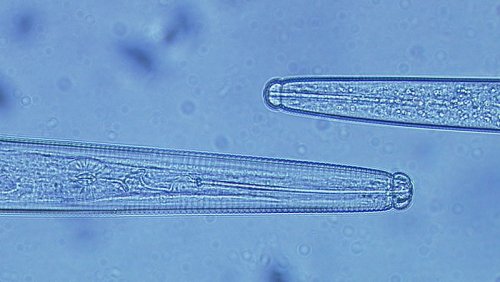
    The University of Florida study is a continuation of an ongoing project. The latest round of support will fund the final three years of the six-year nematicide study. The project assesses a panel of nematicides with the goal of giving turf managers rotational options to manage against resistance.
    "The SDHI nematicides fluopyram (Indemnify) and cyclobutrifluram (Trefinti) are the most effective turfgrass nematicides currently available," Crow said. "However, the discovery of resistance to SDHI nematicides in turfgrass nematodes following prolonged use has made it clear that SDHI nematicides should be rotated with nematicides from other classes for resistance management."

    A project at the University of Wisconsin has the goal of pinpointing where and when to apply fungicide for optimal control of dollar spot. University of Wisconsin photo Dr. Crow's lab in Gainesville is a global leader in nematode research.
    "This first-of-its-kind experiment is a six-year project evaluating 10 different nematicide rotations of SDHI nematicides (Nematicide Resistance Group N-3) with nematicides from other Nematicide Resistance Groups," said Crow (below right). "There are two field trials, one targeting the grass root-knot nematode and the other targeting sting nematode. We are comparing the nematicide rotation programs for efficacy against the target nematodes, turfgrass health, development of nematicide resistance, and impacts on nematode community structure as an indicator of soil health."
    The projects were selected by a committee that included two members of the GCSAA board of directors, superintendents, university researchers and other professional scientists. Each project will receive up to $100,000 from a GCSAA Foundation block grant. 
    "The costs of conducting turfgrass research costs are rising, but many funding opportunities are decreasing because of cuts at the federal level," Koch said. "That's why the funding provided by the GCSAA and the WGCSA is so critical to advancing research that directly benefits golf course superintendents. In this particular project, we're looking to advance precision management of dollar spot that will allow us to pinpoint when and where fungicides can be the most effective. This will result in improved disease control and decreased costs for the superintendent. 
    With the 2026 funding, GCSAA funding is supporting nine ongoing university research projects, that total $582,807 in funding for applied turfgrass research.
  • Thanks to a grant by the FairWays Foundation, more than 100 golf courses nationwide joined Audubon International's Monarchs in the Rough program in 2025.
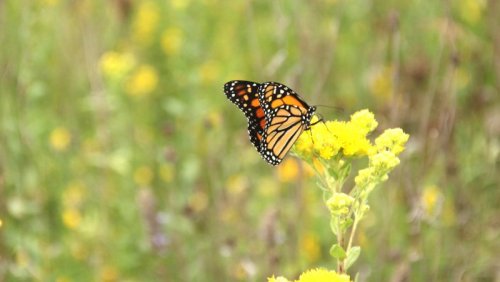
    A total of 127 golf courses joined the program last year, bringing the total number of golf courses in the U.S. and Canada that are participating in the program to almost 1,000. Those courses currently are managing more than 1,300 total acres of out-of-play areas as pollinator-friendly habitat.
    Monarchs in the Rough was started in 2018 by Audubon International and the Environmental Defense Fund, to help golf courses across North America create pollinator habitats in out-of-play areas to help boost declining populations. The USGA also became involved in the program in 2019.
    "Golf courses continue their positive contribution to the habitat needed," Audubon International CEO Christine Kane said in a news release. "Monarchs in the Rough is an effective and powerful way for courses of all kinds to take part in increasing new habitat for these iconic and beautiful creatures. We're thrilled so many courses signed on in 2025, and we look forward to adding many more this year and well into the future."

    Nearly 1,000 golf courses in the U.S. and Canada are participating in the Monarchs in the Rough program since it was launched in 2018. Monarchs in the Rough photo Every course received a shipment of regionally appropriate milkweed seed and signage promoting the program, technical guidance and tips about how to communicate the program to members and golfers.
    Tim McCann, director of greens and grounds maintenance at Harbour Ridge Golf and Yacht Club in Palm City, Florida, says he converted an acre from a former tee box location that had been moved.
    "We've filled one of our beds with a lot of milkweed," McCann said. "It was an old tee that was moved to another location."
    Established in 2019 by former Aquatrols president and CEO Matt Foster, the FairWays Foundation is a 501(c)(3) nonprofit organization dedicated to advancing conservation and environmental stewardship. By providing grants to both small and large-scale projects, the foundation addresses environmental challenges and supports educational initiatives worldwide.
    Since its founding, the foundation has donated more than $1 million to more than 60 recipients.
  • To better serve golf course superintendents in the fight against invasive grassy weeds, Moghu USA is expanding its distribution network for PoaCure SC herbicide.
    The company has reached distribution deals with Noble Turf and Genesis Distribution/Genesis Turf. Effective immediately both companies will offer Poa Cure.
    Genesis is based in Glen Rock, Pennsylvania. With headquarters in Mount Laurel, New Jersey, and additional outlets in Egg Harbor Township, New Jersey and Warington, Pennsylvania, Noble Turf serves customers throughout parts of the Northeast and Mid-Atlantic. 
    With the active ingredient methiozolin, Poa Cure was developed in 2007 by researchers in South Korea at the Moghu Research Center. The company founded Moghu USA five years later to distribute the product in the U.S.
    "Our expansion through trusted partners like Noble Turf and Genesis Distribution transcends simple logistics; it is about ensuring golf courses have immediate, hands-on technical support alongside streamlined access to PoaCure SC," said Kyung Han, executive director of sales and technology at Moghu USA.
    Click here for a list of Poa Cure distributors.
  • A unique turf management educational program that targets non-traditional students entering its fourth year of producing the next generation of turf managers highlights the ongoing need for highly trained professionals in the business of golf course management.
    The USGA recently announced the next class in the fourth edition of its Greenkeeper Apprenticeship Program.
    "Simply put there still is a need (for more education)," said Carson Nesbella, Ph.D., program director for the USGA apprenticeship program and an instructor at Sandhills Community College in Pinehurst, North Carolina.
    "I think that if you talk to anybody that you might run into at a trade show or at one of our association meetings, they still have a need for entry level crew members. While we've addressed some gaps and some holes, at the leadership level, there's still a need to bring in individuals and to train them up and bring them up to speed."
    Developed in 2023 by leaders at Pinehurst Resort and the USGA in cooperation with Sandhills Community College, the program provides a mix of classroom instruction with on-the-job training, and pairs each student with an on-course mentor, intended to advance their professional development.
    The program was expanded in 2024 to include instruction in cooperation with Horry-Georgetown Technical College in Myrtle Beach, South Carolina. The program provides tuition-free learning for all students for one year and paid on-the-job training positions at partner golf courses.
    The Greenkeeper Apprenticeship program is designed to provide:
    A strong foundation in turfgrass and soils science, fertility, pest and water management, rules of golf and leadership skills Practical in-class instruction Work as an apprentice at a local golf course under the mentorship of a leader in the field to gain valuable experience and connections, all while earning an income as a full-time employee Through this program, students develop their skills at top-tier facilities such as Pinehurst Resort and Country Club, Tobacco Road Golf Club, The Dunes Golf and Beach Club, Bulls Bay Golf Club and Southern Pines Golf Club.
    The program has produced 68 graduates through its first three years. 

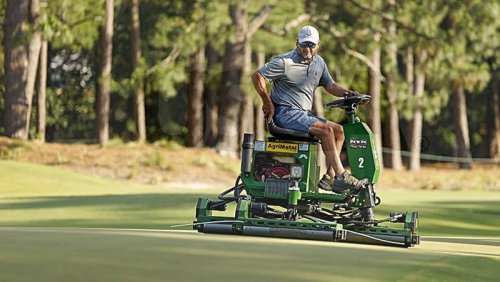
    A member of the USGA Greenskeeper Apprentice Program mows a green ahead of the 2024 U.S. Open at Pinehurst No. 2. USGA photo by Kathryn Riley "Those are modest numbers compared to some of the more established programs," Nesbella said. "But at the same time, we're living in a space where with this program, you bring in a cohort. So we don't just take students asynchronously that are going to come in and start their program at one point and leave it another.
     
    "All of our students started the exact same time at the beginning of the year. They stayed together like a family throughout the year and then they graduated at the end of the year together. And so that cohort model means that we have to be a little bit more intentional about how many students we take."
    This year's class includes 36 students from 15 states. Among them are:
    Rick Shannon, 53, from North Carolina, who is an active military member with a bachelor's degree in criminal justice and a master's degree in business administration. Haley Fox, a Colorado native with degrees in biology and exercise science, the daughter of a PGA professional and a golf course superintendent of more than 30 years. Nicholas Chace, who was born in Russia and moved from Massachusetts to join the program.  A role in turfgrass instruction is a natural fit for Nesbella. With two bachelor's degrees from Michigan State (crop science and environmental science), a master's in applied horticulture from Cornell and a doctorate from Penn State in agricultural and extension education services, Nesbella is a natural educator. He served as a graduate teaching assistant while at Cornell and worked as an educator for three years in the public school system in Montague, Michigan, where the classes he taught included AP Environmental Science, Earth Ecology, Natural Resources, Food Science, Vet Science and Integrated Projects in Agriscience.
    "I have roughly seven years experience in the industry working on golf courses and athletic fields that I was able to accrue during during my time after high school and through college when I was focused on a crop and soil science degree and a concentration on turfgrass science and that gave me a really nice foundational knowledge for applied turfgrass science management," Nesbella said. "And then from there flipping over into the education space and getting a teaching degree and teaching high school agriculture, and then ultimately getting a doctorate in agricultural education, gave me sort of this sandwich effect, with the content knowledge on turfgrass and then the best practices and high impact educational philosophy.
    "And so putting those two together, I think it makes for at least myself an individual that can design and deliver a curriculum that is best suited and tailored to the needs of an individual who is in a continuing education capacity and wants to be a developed member of the workforce."
    Future plans for the apprenticeship program include not only growing throughout the Carolinas, but other parts of the country as well.
    "We envision expanding the program to a couple new sites and identifying those sites this year and locking in those sites to have a 2027 start date," Nesbella said.
    "And we think that what's needed about the program is it's going to have some regional influence in the curriculum, and going to have to shift and mold to the needs of those specific climates and the specific stakeholders right within those areas. And so, we've identified a few other sites that we'd like to expand to. And so in the next five-year window, you're probably going to see a map that has a nice little spread across the country of programs that are put in places where there's a high concentration of golf courses, some stakeholders that are extremely invested and supportive of the program in that area, and then also tailored to the needs of the area."
    Applications for the 2027 cohort will be accepted later this year.
×
×
  • Create New...